Protein, creatine and the anabolic window: what the science says and what the wardrobe says
A lot of things are said about supplements in the locker room. Some are true. We separate the useful ones from the legends without boring you.
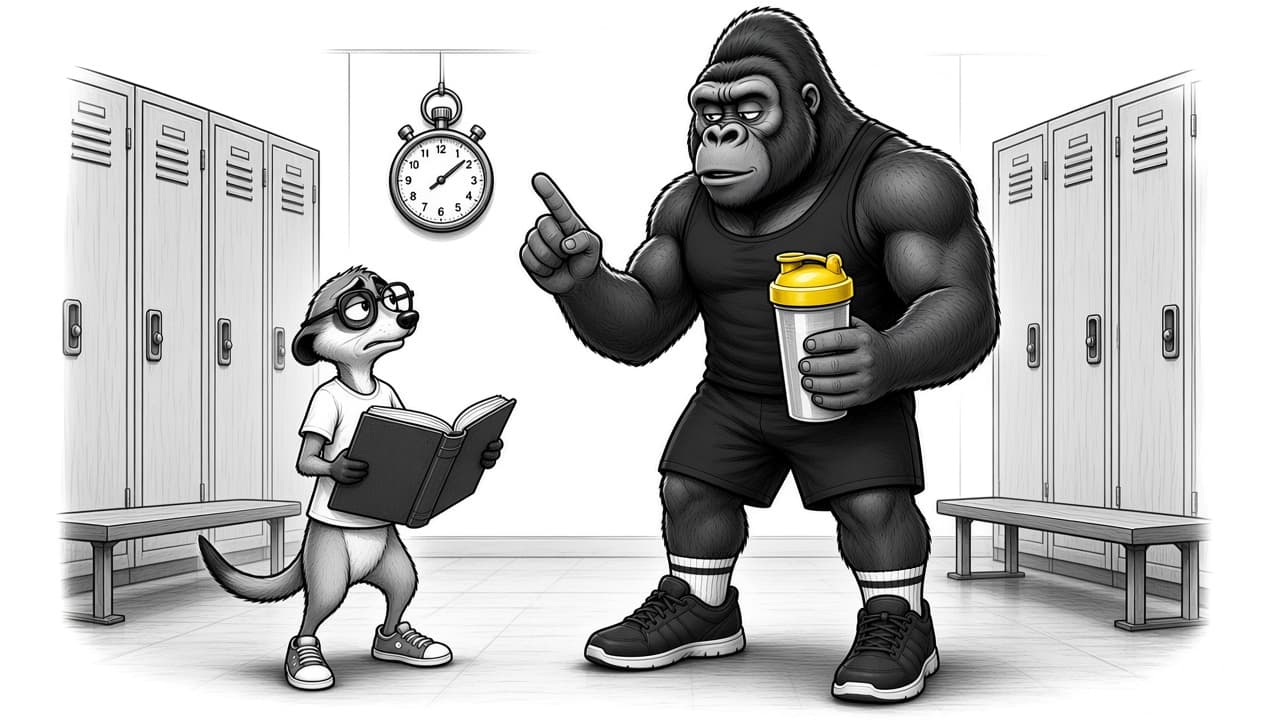
In every locker room there is a nutrition expert. He has not studied nutrition, but he has a two-kilo jar, a shaker with a permanent vanilla smell, and a lot of confidence. We are going to contrast his phrases with what the scientific evidence says.
"If you don't drink the shake in 30 minutes, you miss the workout"
What the locker room says: There is a magic window after training and if it closes, your muscles evaporate. What science says: What matters most is how much protein you eat throughout the day, not the exact minute. Spreading it over several meals helps, but you don't have to run out of the gym with the shake as if it were an Olympic relay. You can shower. You can even come home and have dinner like a person. That said, if you train first thing on an empty stomach or haven't eaten for many hours, eating some protein afterwards makes more sense. The window is not magical, but it is not infinite either.
“The more protein, the more muscle”
What the locker room says: If you grow with 100 grams, with 300 you grow three times as much. What science says: For people who train, the usual recommendations from sports nutrition societies are between 1.4 and 2 grams per kilo of weight per day. Above that, the extra benefit is small. What does increase is the super bill.
To give you an idea: a 75 kilo person who trains would walk approximately between 105 and 150 grams a day. With three or four meals that include a good portion of protein, you can get there without having to live attached to the boat.
"Creatine is for bodybuilders and retains fluids"
What the locker room says: Creatine swells you up like a balloon and only those who look in the mirror between sets take it. What science says: Creatine monohydrate is one of the most studied supplements that exist. The usual regimen is 3 to 5 grams per day**, every day, without mandatory "loading phases". You can gain weight a little because of the water entering inside the muscle, which is right where you want it. It helps especially in short and intense efforts, which is what we do in the gym. When to take it? It doesn't matter much. The important thing is consistency. There are those who take it with breakfast, those who mix it with their shake and those who forget it three days in a row. The latter does not notice anything and concludes that "it does not work."
“Protein powder is better than food”
What the locker room says: chicken is for amateurs. What the science says: Protein powder is convenient food, nothing more. If you reach your daily amount with eggs, legumes, meat, fish or yogurt, the bottle is optional. It's a practical resource, not a secret ingredient.
"If you take supplements, it doesn't matter what you eat"
The locker room expert doesn't even say this out loud, but you can sense it. And no: no supplement is worth sleeping five hours and having bagged chips for dinner. The supplements are the cherry on top. The cake is still to eat well, train wisely and rest.
How to recognize a suspicious supplement
- Promises results "in days." - It has a "patented formula" that doesn't tell you how much of each thing it takes
- It is sold by someone who also sells courses to get rich
- The before and after photo has a different light, a different tan, and sometimes a different person. If you want to be sure of what you take, look for products with independent quality control seals, especially if you compete.
Summary for WhatsApp group
- Protein: sufficient and distributed. No need for a stopwatch
- Creatine monohydrate: 3–5 g per day. Boring, cheap and effective
- Smoothie is not magic. It's milk in a hurry. This article is informative. If you have any pathology or specific doubts, consult with a dietitian-nutritionist or your doctor.