The 8 stations of HYROX according to what you really feel
Eight kilometers, eight seasons and eight phases of grief. The HYROX guide that they don't give you on the official website.
The HYROX format is always the same around the world: you run one kilometer, do one station, and so on eight times. Eight kilometers and eight stations. Said like that, it seems like a plan. Lived, it is an emotional journey with more twists than a Netflix series.
Before you start: the starting area
You're in your groove, surrounded by people who look very fit. Everyone looks at the clock. Someone jumps on the spot. Another adjusts his knee pads for the fourth time. You wonder if you've gone to the bathroom enough times. The answer is no. It's never enough.
1. SkiErg, 1,000 meters: euphoria
You leave the first kilometer like a racehorse. You get to the SkiErg and pull as if your life depended on it. Error: You have seven stations left. Emotional phase: "I'm great at this."
2. Sled push, 50 meters: the doubt
The sleigh is not moving. You push. It moves a little. You push harder. You realize you've spent everything on the SkiErg and the pavilion carpet has more grip than you'd like. Emotional phase: "Why did I sign up?"
3. Sled drag, 50 meters: the negotiation
You pull the rope, walk backwards, and the rope gets tangled like headphone cables in 2009. Emotional phase: “If I finish, I promise to stretch every day.”
4. Burpee broad jumps, 80 meters: anger
Burpee, forward jump, burpee, jump. Eighty meters.
You discover that the pavilion is very long and that the ground is further away each time. Emotional phase: sincere hatred towards whoever invented the burpee and towards whoever decided that we had to move forward doing it.
5. Rowing, 1,000 meters: the false rest
You finally sit down. For 200 meters it seems like a vacation. The other 800 remind you that you are paddling. Emotional phase: "I would stay here to live. No. Yes. No.
6. Farmer's Walk, 200 meters: acceptance
Two kettlebells and walk. The hands open on their own, but the brain has already accepted its fate. Emotional phase: inner peace with cramps.
7. Strides with bag, 100 meters: desperation
The bag on the shoulders, knee to the ground and forward. The legs, which have already run seven kilometers, file a formal complaint with the management. Emotional phase: "I can't feel my quads. "I may not have them."
8. Wall balls, 100 repetitions: redemption
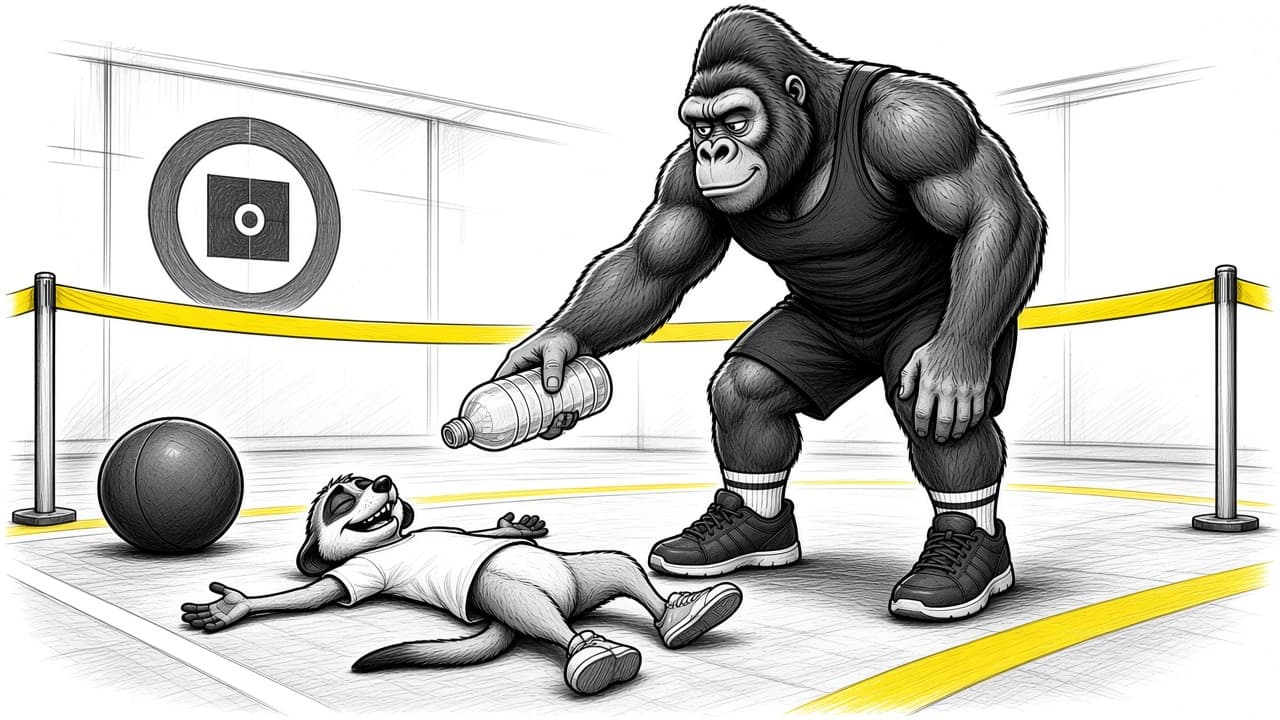
One hundred. With the public screaming. Each throw weighs more than the last and the target seems to rise by itself. When you hit the last one, you feel invincible for three seconds. Then you sit on the floor. Emotional phase: "I would do it again." This phrase is what explains why HYROX does not stop growing.
The kilometers in between: the other HYROX
Many people train for the stations and forget that there are eight kilometers of running, and that they run tired. The kilometer that comes from the sled is nothing like the one you run on a Sunday in the park: your legs are heavy, your heart is racing and your brain suggests you walk "just a little bit." That's why race pace is almost more important than strength. A pace that you can maintain for eight kilometers is worth more than three heroic kilometers and five crawling.
Tips that do work
- Control the first kilometer. If you run it like a 5K, you will pay for it on the sled.
- Train transitions. Between running and starting a station, more time is lost than you think: finding your lane, getting positioned, catching your breath.
- Practice wall balls tired. Doing a hundred frescoes is nothing like doing them after seven kilometers. Put them at the end of your workouts.
- Do long sets in blocks. For wall balls and lunges, decide before starting how you are going to break them up. Improvising with your pulse at 180 rarely goes well. The weights of each station depend on the category. Always check your division's official rules before training with the wrong weight and discovering it on race day.